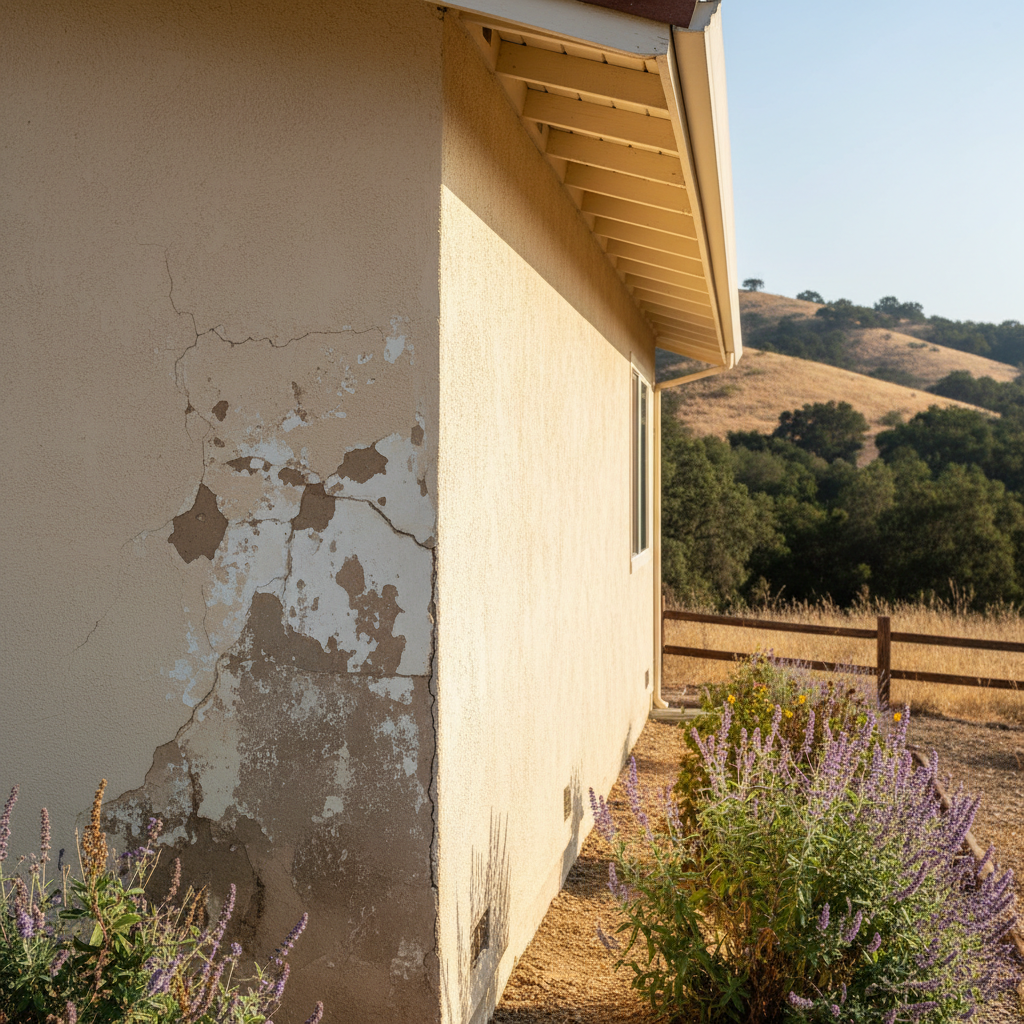
Alright, let's talk stucco. If you're building a new home or doing a major remodel here in Los Gatos, you've probably heard a couple of terms thrown around: 'traditional stucco' and 'EIFS.' Both are stucco, sure, but they're pretty different animals when it comes to how they're built, how they perform, and what they'll cost you in the long run. As someone who's been working with stucco in this area for years, I’ve seen both systems installed well and, frankly, installed poorly. You really need to understand the differences.
Traditional Stucco: The Classic Choice
When most folks think of stucco, they're thinking about traditional three-coat stucco. This is the stuff that's been around for centuries, and for good reason. It's a cement-based product, usually applied in three layers over a wire lath and a weather-resistive barrier. You've got your scratch coat, then the brown coat, and finally, the finish coat with the color and texture you want.
Durability: This system is tough. Really tough, actually. It's basically a hard, rigid shell on your house. It stands up incredibly well to impacts, and once it's cured, you've got a solid, monolithic surface. Here in Los Gatos, with our occasional temperature swings and sometimes heavy rains, that rigidity is a big plus. It's not going to dent or puncture easily.
Maintenance: Generally, it's pretty low maintenance. You'll want to keep an eye out for cracks, especially around windows and doors, and make sure your gutters are doing their job. But for the most part, a good traditional stucco job will last decades with minimal fuss. If you do get a crack, a skilled hand can usually fix it pretty straightforwardly.
Appearance: Traditional stucco gives you that classic, earthy, Mediterranean look that's so popular in many of our hillside homes around Blossom Hill Road. You can get a huge range of textures, from smooth to sand finish to heavy dash. The color is mixed into the final coat, so it's integral to the material itself. That means it won't just chip off like paint.
Cost: Generally, traditional stucco is going to be a bit more expensive upfront than EIFS. It takes more labor to apply, and the materials, while common, add up. But you're paying for that tried-and-true durability.
EIFS: The Modern Alternative
Now, EIFS stands for Exterior Insulation and Finish System. It's a completely different beast. Instead of a cement-based plaster, EIFS starts with rigid insulation boards – usually expanded polystyrene (EPS) foam – that attach to your exterior sheathing. Over that, you get a base coat with a fiberglass mesh embedded in it, and then a final acrylic finish coat. Think of it as a giant, insulated blanket for your house.
Durability: This is where EIFS gets a little tricky. Because the core is foam, it's not as impact-resistant as traditional stucco. A hard hit can dent or even puncture it. However, the acrylic finish coat is very flexible, which means it's less prone to cracking from minor building movement or thermal expansion than traditional stucco. That flexibility is a real advantage in earthquake country, for example.
Maintenance: EIFS needs a bit more attention. You really need to protect it from impacts, and if it does get damaged, water can get behind the system and cause big problems. Regular inspections are key, and you'll want to make sure any penetrations (like hose bibs or light fixtures) are properly sealed. Algae and mildew can also be more noticeable on EIFS if not properly managed, especially on north-facing walls that don't get much sun.
Appearance: EIFS can mimic pretty much any texture and color you can get with traditional stucco, and sometimes even more. Because the finish coat is acrylic, it's very consistent in color and can be quite vibrant. It often looks very clean and modern.
Cost: Often, EIFS can be a bit less expensive to install initially than traditional stucco, mainly because the application process can be quicker. You also get the added benefit of insulation, which can save you money on your energy bills down the road. That's a big plus for our hot Los Gatos summers.
So, Which One Should You Choose?
Look, for most homes in Los Gatos, especially those aiming for that classic look or where long-term, rock-solid durability is the absolute priority, I'm usually going to lean towards traditional stucco. It's a proven system that holds up incredibly well to our local conditions, and as Absolute Stucco, we've installed countless square feet of it with fantastic results.
That said, EIFS isn't bad. Not at all. If energy efficiency is a top concern for you, and you're willing to be diligent about maintenance and protecting the surface from impacts, then EIFS can be a great option. It provides excellent insulation, which is a real benefit for keeping those AC bills down when it's 100 degrees out. Just make sure it's installed by someone who really knows what they're doing with EIFS, because improper installation can lead to serious water intrusion issues.
Ultimately, it comes down to your priorities, your budget, and the specific needs of your home. If you're still on the fence, give us a call. We can come out, look at your project, and give you an honest assessment of what makes the most sense for you.